Essential Wilderness Survival Skills
Wilderness survival skills are crucial for anyone who ventures into natural settings, whether for camping, hiking, or extended periods of outdoor exploration. In this article, we’ll delve into essential techniques and tips that can ensure safety and enhance survivability in the wild. Enhanced with HTML headings for structure, we aim to provide a seamless reading experience while integrating relevant keywords to boost search engine visibility.
H2: Understanding the Basics of Wilderness Survival
Before heading into more complex survival skills, it’s important to grasp the basic principles of wilderness survival. These include the “survival rule of threes” which states that in extreme conditions a person can survive three minutes without air, three hours without shelter in harsh environments, three days without water, and three weeks without food. Knowing these basics can help prioritize survival efforts in emergency situations.
H2: Building a Shelter
H3: Types of Shelters
Constructing a shelter is one of the first things you should do. There are several types of shelters to consider such as lean-tos, A-frames, and debris huts. Each type has its specific benefits depending on the environment you are in.
H3: Importance of Insulation
Insulation is crucial in maintaining body heat. Using leaves, grass, or small branches can make a significant difference in keeping warm. Always ensure the shelter is waterproof and windproof to protect against the elements.
H2: Finding and Purifying Water
H3: Locating Water Sources
Water is a critical survival need. Natural sources include streams, lakes, and morning dew. Sometimes, water can also be extracted from certain plants or by making a solar still.
H3: Purification Methods
Once water is found, purification is the next critical step to avoid waterborne diseases. Boiling is the most universal method, but using water purification tablets or portable filters can also be effective.
H2: Creating Fire
H3: Importance of Fire in Survival
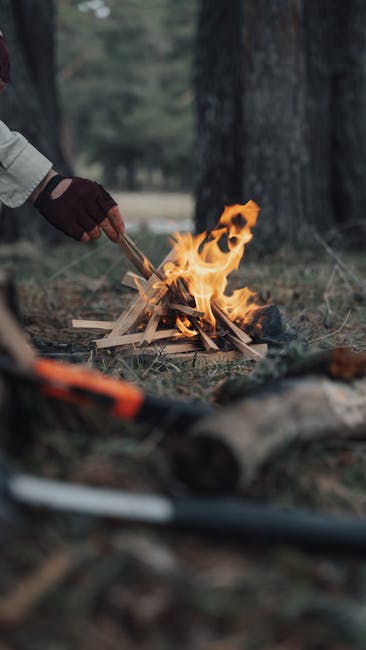
Fire serves multiple survival purposes: warmth, cooking, signaling, and protection from wildlife. Mastering the art of fire-starting is a fundamental wilderness skill.
H3: Techniques of Fire Starting
There are several methods to start a fire including using a flint and steel, matches, lighters, or even the sun with the help of a magnifying glass. Always gather ample dry materials such as twigs and leaves to keep the fire going.
H2: Food Procurement
H3: Foraging for Edible Plants
Identifying edible plants — such as berries, nuts, and certain mushrooms — can be a sustainable food source. However, knowledge about toxic flora is just as crucial to avoid poisoning.
H3: Hunting and Trapping
For longer survival scenarios, hunting small game or fishing can be viable options. Simple traps and snares can catch small animals, while knowing basic fishing techniques can also be very advantageous.
H2: Navigation Skills
H3: Using a Compass
A compass, paired with a detailed map, can be instrumental in finding your way through unfamiliar terrain. Understanding how to read compass directions correctly can save time and energy.
H3: Natural Navigation
In situations without a compass or map, natural navigation methods come into play. Observing the position of the sun, the movement of stars, and even the growth patterns of moss on trees can guide one to safety.
H2: First Aid and Self-Care
H3: Basic First Aid
Knowing basic first aid procedures can mean the difference between life and death. This includes how to treat cuts, burns, and fractures until professional help can be reached.
H3: Importance of Mental Health
Survival situations can be as taxing mentally as they are physically. Maintaining a positive mental attitude and managing stress through techniques like mindfulness can drastically improve the chances of survival.
H2: Conclusion
Wilderness survival skills are indispensable, not only for extreme adventurers but also for anyone who enjoys exploring nature. By understanding and mastering these essential skills, you enhance your ability to face challenging situations and ensure that your outdoor experiences remain safe and enjoyable.
Remember that preparation is key. Prior to any wilderness adventure, equip yourself with the necessary knowledge and tools. Continuous learning and practice of these skills can significantly boost your confidence and efficiency in managing emergency situations in the wild.
Stay safe and embrace the beauty of the great outdoors with the assurance that you are well-prepared to handle whatever comes your way.